Fight the Blight

GROW — practical gardening tips
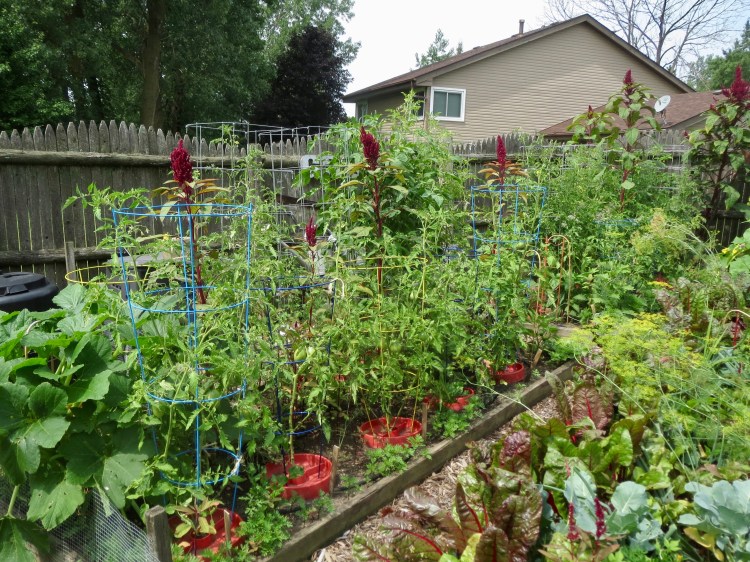
Tomato Beds – 7/25/17

Everyone knows that I love tomatoes, but not everyone knows that for a long time I have been dealing with soil borne diseases on my tomato plants. Despite various preventative measures I’ve tried, this year is no different. Early blight has hit several of my tomato plants. After I posted a picture of them and said that I would begin rescue operations when it was drier outside, a friend in Chicago said she had the same problem and asked what to do about it. I’m writing this post to answer that question for her and anyone else who is dealing with early blight and other fungal diseases.

As already noted, I wait until the tomato plants are dry before I do anything. Then the first thing I do is prune away all the yellowed and spotted leaves. These do NOT go into my compost.  The disease moves from the bottom up, so the plants will start to look leggy as the season progresses. With clean pruners, I also remove any non-fruit bearing suckers I see higher up the plant. Removing those unneeded branches will provide better air circulation for the plants, which also helps keep the disease from spreading.

In order to avoid spreading the disease from plant to plant, I spray the pruners with Lysol whenever I move from one plant to the next.  When I first took the master gardener course, I learned that bleach is not instantly effective for sanitizing tools because it requires at least 10 minutes of soaking. Who has time to do that between every plant? Moreover, bleach is corrosive, so it could damage your tools. Someone in the class suggested we do what he had heard rosarians do: spray rubbing alcohol on the pruners. I did that for years until someone in Midwest Fruit Explorers passed around a study that suggested that straight Lysol was more effective, so that is what I have done ever since. You could explore the various options for yourself. I keep the Lysol in a little spray bottle, and I use a paper towel or a clean rag for wiping off the clippers.

Then I spray the plants thoroughly with an organic fungicide to help keep the disease from spreading. Years ago I tried an organic copper fungicide, but I have had better success in recent years at slowing the disease down with an organic biofungicide called Serenade. I buy it at local garden centers and go through a bottle or two every year. After I prune each plant, I spray it from the bottom up. When all the pruning is done, I spray all the plants in the bed from every angle, all around, as best I can.

I have also taken to wearing latex gloves when I perform this whole rescue operation. I can just throw them away when I’m done and not have to wash them before I use them again (as I should with regular garden gloves). I do not recommend doing this job with bare hands–they can get irritated by the sprays and plant oils.

That’s how I fight the blight! At another time, I will talk about the measures I take each year to try to prevent these soil borne diseases.

Hibiscus Hiatus

an EAT post from my archives

I may earn commissions for purchases made through any Amazon links in this post. See disclosure here.

We’re already into late spring, but I’m taking a short hiatus from intensive gardening to share a couple hibiscus recipes.

Spring Garden Salad

I made this special salad entirely from my spring garden. From the cool season beds I’d planted six weeks earlier, I got two kinds of kale, Swiss chard, radishes, green onions, and a little arugula. (The lettuce I planted did not come up. I’m thinking the seeds were probably too old.) I meant to put pea shoots in the salad, too, but I forgot! I also added a some amaranth greens (the purple leaves), Lamb’s Quarters, and dill. All of these seed themselves and come up on their own. Of course, I HAD to add all the edible flowers that were blooming: chives, Bachelor’s Buttons, and Golden Gem Marigolds. I just LOVE edible flowers!

Hibiscus Vinaigrette

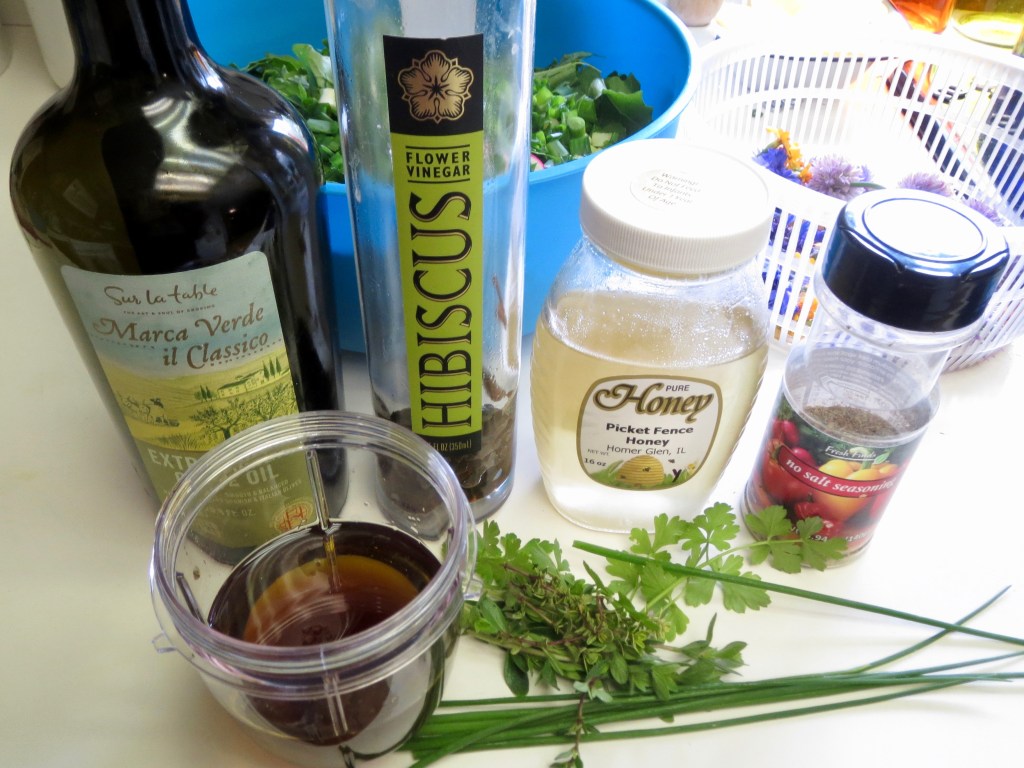
 Ingredients for Hibiscus Vinaigrette

You don’t see any hibiscus flowers in the salad, but they’re in there—in the dressing! The above picture shows what I put into the salad dressing: hibiscus vinegar, olive oil, local honey, no-salt seasoning, plus parsley, chives, and rose thyme from my garden. Yes, the rose thyme really smells and tastes like rose petals. It has been thriving in my herb bed for several years now. It is definitely hardier than common thyme, and it even seems to be hardier than lemon thyme, too.

I didn’t really measure out the ingredients. You can see how much oil and vinegar I put into the Bullet Blender cup—about 1/4 cup hibiscus vinegar and 1/3 cup olive oil. I added 2-3 teaspoons of honey and blended it. Then I added 1 teaspoon of no-salt seasoning, and I used kitchen scissors to cut the herbs you see into the cup before blending it again for a little bit. If I were planning to keep this dressing to use later, I would also add 1/2 teaspoon dijon mustard to help keep it emulsified.

Jamaica (Hibiscus) Punch

As you may have noticed, I used a store bought hibiscus vinegar in my vinaigrette. Alas, I have not grown the kind of hibiscus best for culinary use: Hibiscus sabdariffaFortunately, dried hibiscus flowers are readily available in various ethnic markets and online (but not always certified organic, alas). This fact makes it easy serve edible flowers year round, whether you grow any or not.

Here’s a sampling of dried hibiscus available at a local supermarket. I included a box of Red Zinger because hibiscus is the main ingredient in that tea blend, and it has rosehips, too. You may have already had some edible flower tea without knowing it!

Different countries give this flower different names, including Jamaica and Rosa de Jamaica. Actually it is the calyxes, not the flowers, that are used. I have taken to combining hibiscus tea with Jamaican style ginger beer to make a red punch drink that I like to call Jamaica Punch. Ginger beer, like root beer and ginger ale, is non-alcoholic (except for a few varieties—check the label), and it has much more flavor than ginger ale, which usually doesn’t even have ginger in it.

 Hibiscus Vinegar, Hibiscus Flowers in Syrup, Candied Hibiscus

Other hibiscus products are a little harder to find, but they’re out there. The hibiscus flowers in syrup are a great way to make any drink, including my Jamaica Punch, extra special. Put a few drops of the syrup and a flower in the bottom of a pretty goblet or champagne flute, and then add hibiscus tea and ginger beer, or sparkling water or champagne—anything! I guarantee you will impress your guests and make them feel special.