How to Grow the Magical Color Changing Edible Flower!
I may earn commissions for purchases made through any Amazon links in this post. See disclosure here.
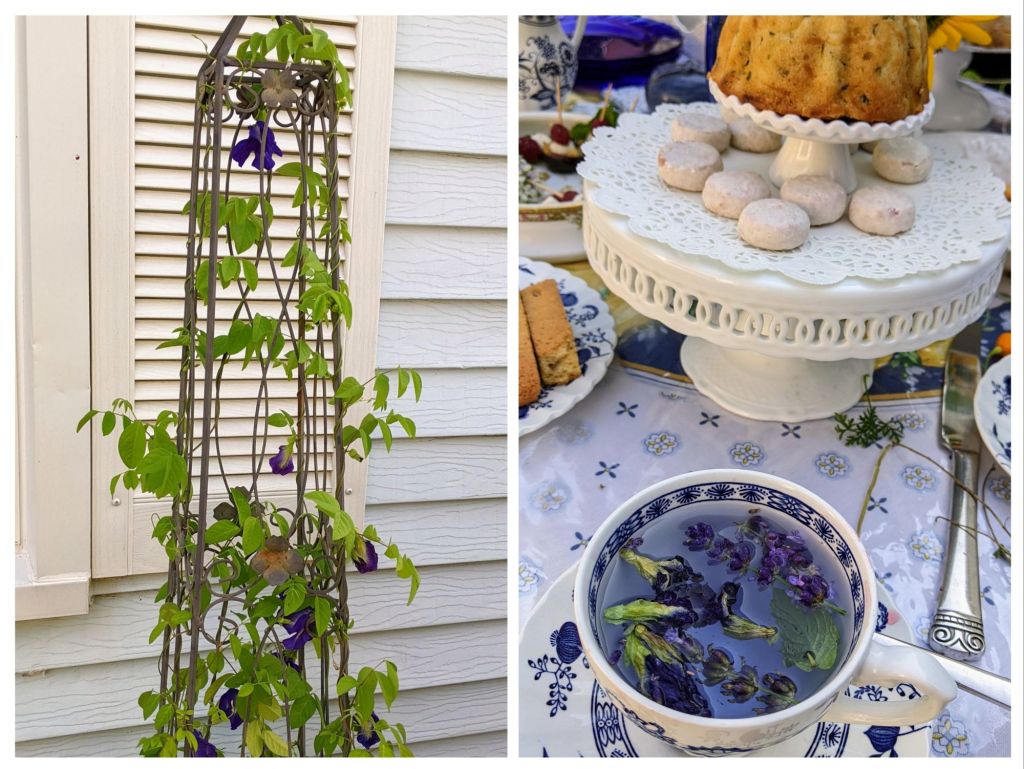
I’ve just experienced my greatest success in starting Butterfly Pea flower (Clitoria ternatea) seeds. These seeds are rather difficult to start, so I’m going to share what has worked for me. (If you want to know the secret of my success right away, scroll down to Third Attempt at Starting Butterfly Peas.)
Why Grow Butterfly Peas
First, I’ll tell you why I wanted to grow Butterfly Pea Flower. For one thing, it’s a beautiful purple-blue edible flower. I just love edible flowers! Second, Butterfly Pea flowers can be used as a food dye, and I love the color blue. And last but not least, its color changes from bluish purple to pink when you add something acidic. If you make a blue tea with it, you could add lemon juice and watch it turn pink. How fun is that? You could use it to make your own pink lemonade.

By the way, just like with regular peas and snow peas, the leaves and young pods of the Butterfly Pea plant are also edible.
First Attempt at Starting Butterfly Peas
I successfully grew Butterfly Pea flower for the first time two years ago when my friend Heather Andrews, The Thoughtful Gardener, sent me a package of “Thai Double Blue” Butterfly Pea seeds from Baker Creek. The package had only nine seeds in it, so I split them and tried starting four of them indoors and the other five with the winter sowing method. I got them in mid-March, and I was in a hurry, so I don’t even remember if I followed Heather’s tip to scarify them by nicking them with nail clippers. Others recommend filing the seeds or soaking them overnight, and some say to try both filing/nicking them and soaking them. These seeds have a shell that’s tough to crack! Since winter sowing takes care of the scarification process naturally, I skipped it on the winter sown ones.
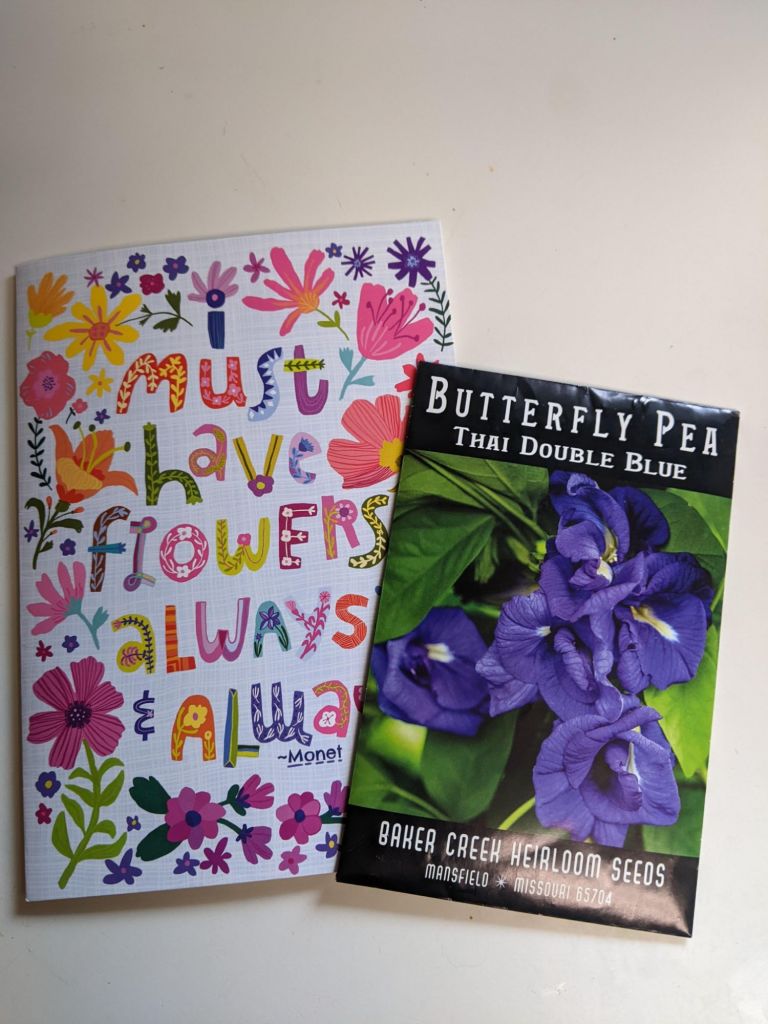
The result was that only one seed sprouted. It was one of the winter sown ones, not one of the ones I’d started indoors. That’s surprising because I learned later that Butterfly Peas do not tolerate cold or even cool weather very well. Apparently the winter sowing jug not only took care of scarifying that seed but also kept it warm enough to germinate. Since Butterfly Peas do not like cold temperatures, it’s best to wait until spring if you’re going to use the winter sowing method.
I planted that seedling in a container with a pretty trellis support. Because Butterfly Peas need lots of sun and heat, I placed the pot by the driveway on the south side of my house. And that one seedling grew into a nice vine that produced many flowers over the course of the season. I harvested the flowers as they appeared, air dried them, and collected them in a vacuum sealed jar.
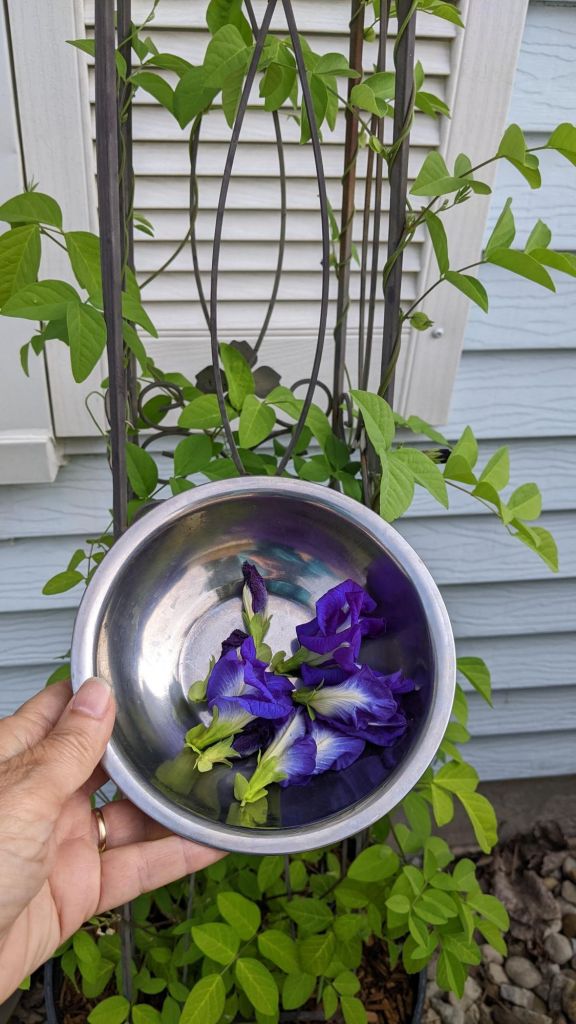
Using Butterfly Pea Flowers
The flavor of Butterfly Pea flower tea isn’t that great in my opinion. But it’s supposed to be a healthy tea, reputed to enhance memory, calm nerves, and help against stress and depression. I usually mix it with other herbs that I grow for tisanes. Early that fall I hosted a garden party and let my guests choose plants from my garden to make their own tea blends. I also supplied lemon wedges for additional flavor—and so we could enjoy the fun color change.

Second Attempt at Starting Butterfly Peas
One out of nine is not a good germination rate, even for seeds that were a year old. Last year I resorted to ordering seeds on Amazon because I could get ten times as many seeds for only twice the cost. This time I nicked about ten seeds and soaked them overnight before starting them indoors on a heat mat. And because of my winter sowing success the previous year, I put another ten seeds in a winter sowing jug. I did that at the end of March, and one of the winter sown seeds germinated by April 19th. That was all. No other seeds came up.
Then I got distracted by other projects and failed to get that one little seedling transplanted in time for it to do well. I still had some of the dried Butterfly Pea flowers from the previous year, and those were still good to use. Now, however, the ones that are left from two years ago have turned black and green. As an experiment, I just now tried making a tea with them. The flowers turned green, and the water did not change color at all. It smells kind of like peas or spinach.
Third Attempt at Starting Butterfly Peas
The third time is the charm! Since I was still using the Butterfly Pea seeds I bought on Amazon last year, I doubled up and nicked four dozen seeds with a pair of nail clippers. Then I soaked half of those overnight before planting them in cell-packs. I put those cell-packs on a small self-watering tray and placed it in front of a heat register in my kitchen. I could have placed it on a heat mat in my basement, where I usually do my seeds starting, but I figured I’d check it more often if it was in my kitchen.
I put the other two dozen nicked seeds in between two damp paper towels, which I sealed inside a zip-close bag. This I placed on top of the plastic heat register extender in our bedroom. I was hoping I’d remember to check it daily. That was on March 27th. After ignoring it this past weekend, I checked it yesterday, April 7. And I found not one, not two, but TEN of those two dozen seeds had germinated!
Here’s a video of what I found when I checked those Butterfly Pea seeds eleven days after starting them. If you prefer, you may watch it here on YouTube.
That’s it! This is the best method for germinating Butterfly Pea seeds. I’m not even going to bother trying the winter sowing method this year. And next year I won’t try the typical indoor seed starting method either, which has failed me twice. I still have a good number of those seeds I ordered from Amazon left. Next year I’ll take about three dozen of those Butterfly pea seeds, nick them with nail clippers, and start them with the damp paper towel method.
Tips for Growing Edible Butterfly Peas
Butterfly Peas are hardy in zones 10-12. In cooler zones like mine, we grow them as annuals. They can go in the ground if you plant them in soil that is well draining. I prefer to grow mine in containers filled with a good quality organic potting mix. Butterfly peas require full sun, and they love very warm temperatures, 75 to 100°F. The flowers bloom for about a day. or so. You can pick them when they bloom or let them shrivel and dry on the vine.
I planted the two largest of the Butterfly Pea sprouts from the paper towels in a 3-inch pot yesterday, and the rest I planted into an 8-pack of tall cells. I put those on a self watering tray under grow lights in my basement. I will transplant them up into bigger pots as needed. Later I’ll harden them off so I can plant them outside when the soil temperature reaches 70-75°F. Then I’ll plant them in self-watering pots with obelisk trellis supports for the vines.

Self-watering pots are the way to go with Butterfly Peas because they do best in soil that is consistently moist but not waterlogged. If you don’t use self-watering pots, you must be sure to keep the plants well watered. You could even grow them in a hanging basket if you keep it consistently watered. To prevent fungal problems from developing, avoid getting water on the plant. You should water from the bottom or aim the water at the roots.
The flowers look pretty as they’re growing on the vines, and you can dry them to use throughout the rest of the year.
Have you drunk or eaten anything made with Butterfly Peas? Let me know in the comments below.
 The Gardener Wife
You’re totally right about the relaxing properties of this tree – and it’s so fun to play with! I love using butterfly pea in mocktails. At Chabucas, we mix it with lemon and honey for a nighttime soother. Loved this read! https://chabucas.com/how-to-make-butterfly-pea-flower-tea/
LikeLike